Your task is not to seek for love, but merely to seek and find all the barriers within yourself that you have built against it.
-Rumi
Integrating Modalities of Healing
Just as each of us has a different modality for learning, we respond to modalities of healing differently. Some clients prefer to grow in conversation while others prefer a more expressive means by which they can externalize their internal struggles. In trying to make these explanations as simple as possible, they lose a bit of the essence from which they were created. Please don’t hesitate to ask for more detailed information about those that interest you.
EMDR
Per the EMDRIA, Eye Movement Desensitization and Reprocessing (EMDR) is an integrative psychotherapy approach that has been extensively researched and proven effective for the treatment of trauma. EMDR is a set of standardized protocols that incorporates elements from many different treatment approaches. To date, EMDR therapy has helped millions of people of all ages and experiences be relieved by many types of psychological stress.
Somatic Exploration and Engagement
Most recent evidence in psychology recognizes that every human experience co-exists in the mind, body and heart (emotions). Somatic exploration and engagement is the effort to reach your memories and emotions through the body. For example, how could you move to begin a dialogue with that pain in your heart? Have you considered that your grief is causing swelling in your neck or knees?
Internal Family Systems (IFS) teaches that we’re made up of many “parts,” each carrying its own feelings, needs, and history. Jung described the Self as the unification of our conscious and unconscious worlds — the centered, wise presence that can meet each part with compassion. In IFS, the part of you that feels abandoned has an age, a story, and a reason it learned to protect you. Another part steps in to soothe, distract, or manage. And the playful, curious parts — the ones that hold creativity and wonder — are still there too, waiting to be invited back into the room, just like in healthy childhood dynamics.
Cognitive Behavioral Therapy
Cognitive Behavioral Therapy (CBT) helps you notice the patterns between your thoughts, emotions, and behaviors — the loops that quietly shape how you interpret yourself and the world. When something painful happens, your mind often creates automatic thoughts to protect you, but those thoughts can become limiting stories over time. CBT invites you to slow down, observe those patterns with compassion, and gently challenge the ones that no longer serve you. As you shift the way you think, you create space for steadier emotions, clearer choices, and a more empowered relationship with your daily life.
Neuro‑Linguistic Programming (NLP) explores the connection between your language, your inner patterns, and the way your nervous system responds to the world. It helps you notice the automatic stories, images, and internal scripts that shape how you feel and act — often without your awareness. Through gentle, guided shifts in how you speak to yourself, how you imagine possibilities, and how you interpret past experiences, NLP creates openings for new emotional responses and more empowered choices. It’s a way of updating old internal maps so your present‑day self can move with more clarity, confidence, and ease
Inner Child
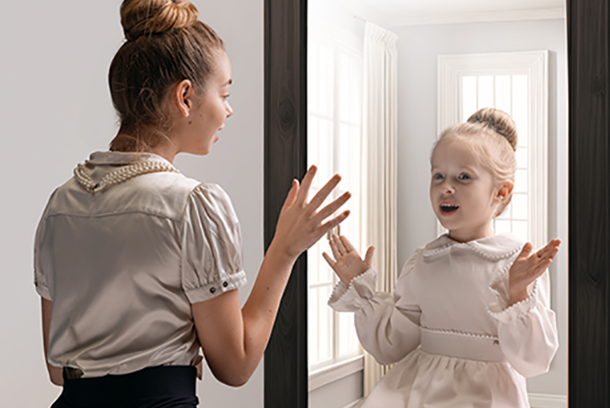
Inner child exploration invites you to reconnect with the younger parts of yourself that still carry unmet needs, old fears, and the emotional truths of earlier experiences. These parts often show up in adult life as sensitivity, self‑doubt, people‑pleasing, or the ache of feeling unseen. Through gentle curiosity, you learn to notice how old wounds surface in present‑day reactions and to offer those younger parts the safety, reassurance, and attunement they never received. As you build a compassionate relationship with these inner ages, you reclaim playfulness, creativity, and the sense of worthiness that healthy childhood dynamics naturally cultivate.
This is the opportunity for you to unearth your personal story, discover your strengths, resources, passions, and road blocks to growth or change through sharing your experiences. What is your story? And more importantly, how do you want to change it?
Cinematic Exploration Of Patterns and Experiences
Film has the ability to bridge all cultures, religions, and differences so that we may understand our beings in relationship to the collective conscious that knows how to heal.
Self Exploration Through Art, Music, and Other Authentic Means
The creative spirit has much to say when we give it the freedom and means to express, without critique. For example, when was the last time you meditated by drawing with your less dominant hand? And did that hand have anything it wanted to say?
Self Exploration By Way Of Nature and Adventure
With these modalities, you seek to reset your buttons with expanded self-efficacy and wholeness in relationship with nature by way of a simple walk along the river, hiking, kayaking, paddle boarding, sailing, skiing, etc. The means by which nature can contribute to your healing are endless — especially in places like Colorado, Florida, Washington, and the Virgin Islands, where ‘wild’ is abundant.
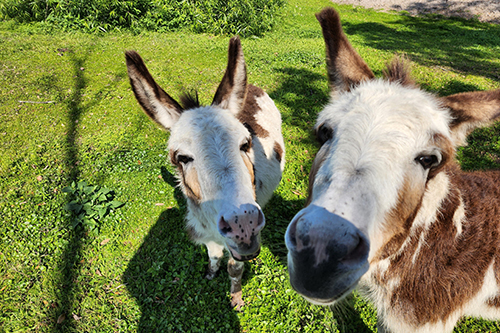
Some people prefer to grow in conversation or other expressive means. Some feel the most supported to externalize their internal struggles in the calming, relational presence of therapeutic animals. These gentle boys love to travel, play, farm living, and sleeping under the moon. They eagerly share their grounding magic, and quiet presence with neighbors of all species.
Waterbody Wisdom Immersion Therapy invites the body into gentle suspension and supported movement in water, creating a fluid, sensory‑rich space where tension can unwind and expression can emerge beyond words. This work can unfold in many settings—our swimming pool, your swimming pool, the crystal‑clear springs of Florida, the quiet waters where manatees drift, the chaotic waters where stingrays visit, or even in the open ocean with snorkels—each waterscape offers a different way of holding what clients can no longer carry by themselves.
And when this state becomes chronic, your nervous system can become hypervigilant — scanning for danger, over‑interpreting tone, bracing for impact, and reacting quickly even when nothing is actually wrong. It’s not a character flaw; it’s your body trying to keep you safe.
Over time, this constant scanning can also shape your inner world. Your brain starts to assume that if something feels off, you must be the problem. That’s how survival mode quietly fuels the “not good enough” feeling — not because you lack worth, but because your system is exhausted and trying to predict and prevent pain before it happens.
In this state, people often experience:
Tight, guarded muscles that never fully relax
Shallow breathing that keeps the body in a low‑grade alarm
Narrowed attention that fixates on what could go wrong
Self‑doubt that feels like truth but is actually physiology
Difficulty feeling pleasure, connection, or ease
Increased fat storage around the midsection of the body
None of this means you’re broken. It means your body has been working overtime to protect you, and it hasn’t had a chance to stand down.
Are you searching for a sacred journey of excellence and expansion? An experience that is holistic, curious, non-judgmental, embodied, and thus modeled?
Maggie is licensed by the state of Florida as a QUALIFIED SUPERVISOR to provide supervision for Mental Health Counselor and Marriage and Family Therapist candidates.
Do you feel overwhelmed by the laws and ethics set forth by the state? We will lean into laws and ethics as guideposts so that you grow confident in your abilities provide services that are supported by the board through information and resourcing.Are you interested in an eclectic set of tools by which to view and resolve your clients’ problems?
I specialize in a transpersonal, strengths based, person-centered, humanistic approach integrating traditionally successful modalities like EMDR, NLP, CBT, Family Systems, Internal Family Systems, and Narrative Therapy with an eclectic weave of expressive interventions including inner child exploration, existentialism, art, music, film, sand tray, nature and play therapies, dream-work, guided imagery, and movement.
Do you want to learn how to incorporate somatic exploration into your sessions with clients by first incorporating them into our time together? We will pull out mats to do that. Or meet in a pool.
I have nearly twelve years’ experience in the field of psychotherapy working with children, teens, and adults. Nearly nine of which have been in private practice. I can help you develop the skills of private practice including treatment plans, note keeping, marketing, and office/admin setup.
I specialize in all three forms of trauma – acute, chronic, and complex, grief (loss), attachment, major life transitions, and oppression, as well as: addiction, adoption, aging and meaning making, anxiety, body positivity, chronic pain, codependency, depression, divorce and relationship conflict/disconnect, identity exploration and affirmation including gender/sexuality/religion, etc., infertility, LGBTQ, life transitions (changes), marital and pre-marital counseling, mindfulness, pregnancy, pre-natal and post-partum, self-esteem, spirituality exploration, stress, women’s issues, and private practice coaching/supervision.
I have so much enthusiasm for the arts and sciences of psychotherapy to share with you.
It has been my experience for many years in this field, that clients do not have to live by the negative symptoms that accompany trauma, oppression, grief, and the like. It has been my life’s work to help others stop living their fears and socially imposed limitations, and instead, reclaim their choices, hopes, and dreams.
If my offerings feel like the next right choice for you, reach out to me. My doors are open wide and all are welcome in celebration of your unique self on this very personalized path of licensure as a therapist.